Salesforce is the undisputed king of customer relationship management, powering the sales operations of over 150,000 companies worldwide and processing billions of customer interactions every day. It is, by any measure, one of the most important business applications ever created. And yet, ask any sales representative how they feel about Salesforce, and you will likely hear a familiar refrain: it is powerful but painful. The platform that was supposed to make selling easier has, for many teams, become a source of administrative burden that actively takes time away from the activities that actually close deals — building relationships, understanding customer needs, and having meaningful conversations.
The numbers tell a stark story. Research from Salesforce's own State of Sales report indicates that sales representatives spend only 28 percent of their week actually selling. The remaining 72 percent is consumed by data entry, CRM updates, pipeline management, report generation, and the endless administrative tasks that modern sales organizations demand. Every minute a rep spends manually logging a call, updating an opportunity stage, or building a forecast report is a minute they are not spending with a customer. Multiply that across an entire sales team, and the productivity loss is staggering.
This is the paradox at the heart of modern CRM: the system designed to help you sell better is often the biggest obstacle to selling more. Salesforce itself has recognized this problem, investing heavily in its Agentforce platform to bring AI capabilities natively into the CRM. But Agentforce operates within Salesforce's walled garden, requiring significant configuration, Data Cloud ingestion, and often MuleSoft integration to connect with the broader business ecosystem. For many organizations, especially small and mid-market companies, this approach is too complex, too expensive, and too slow to implement.
The system designed to help you sell better is often the biggest obstacle to selling more. SuperNinja offers a radically different approach.
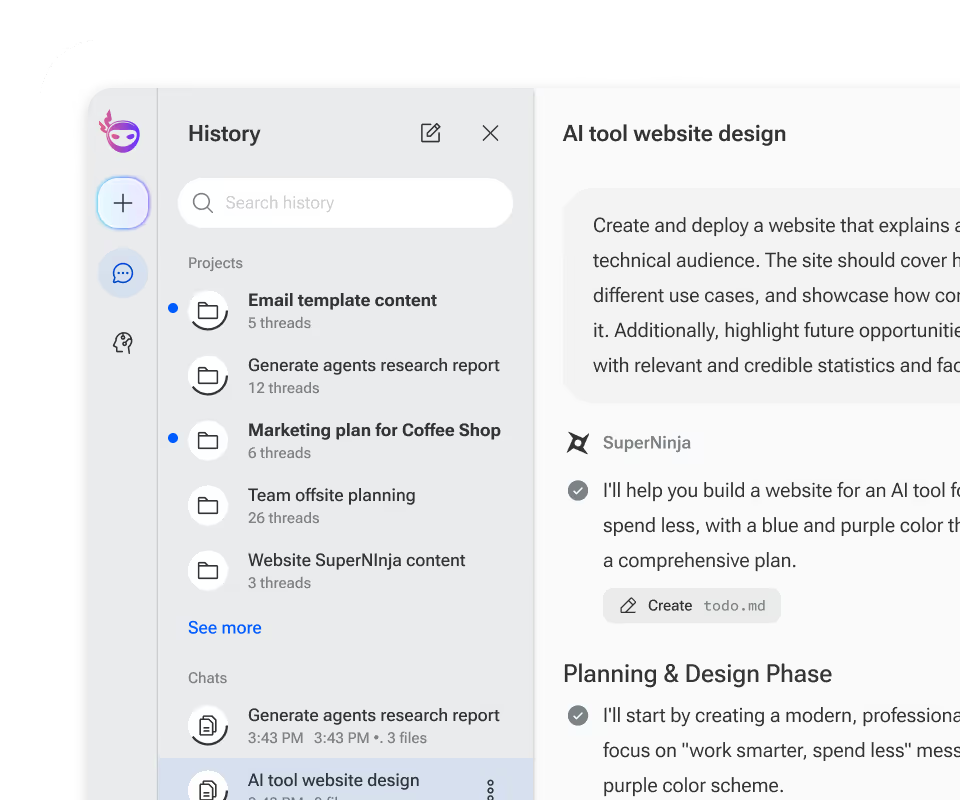
SuperNinja offers a radically different approach. By connecting to Salesforce through the Model Context Protocol (MCP), SuperNinja's autonomous AI agent can interact with your CRM data through natural language, automating the tedious work that bogs down sales teams while providing the kind of intelligent analysis that transforms raw data into actionable insight. No Apex code. No Flow Builder configurations. No MuleSoft licenses. Just tell the agent what you need, and it handles the rest.
How SuperNinja Connects to Salesforce: The MCP Advantage
The Model Context Protocol is the technology that makes SuperNinja's Salesforce integration both powerful and remarkably simple to use. MCP is an open standard for connecting AI agents to external applications, providing a standardized interface for authentication, data access, and action execution. When you connect SuperNinja to Salesforce through MCP, you are not setting up a traditional integration with rigid triggers and predefined workflows. You are giving an intelligent AI agent secure, authenticated access to your Salesforce org, enabling it to read and write data, execute queries, and perform actions based on natural language instructions.
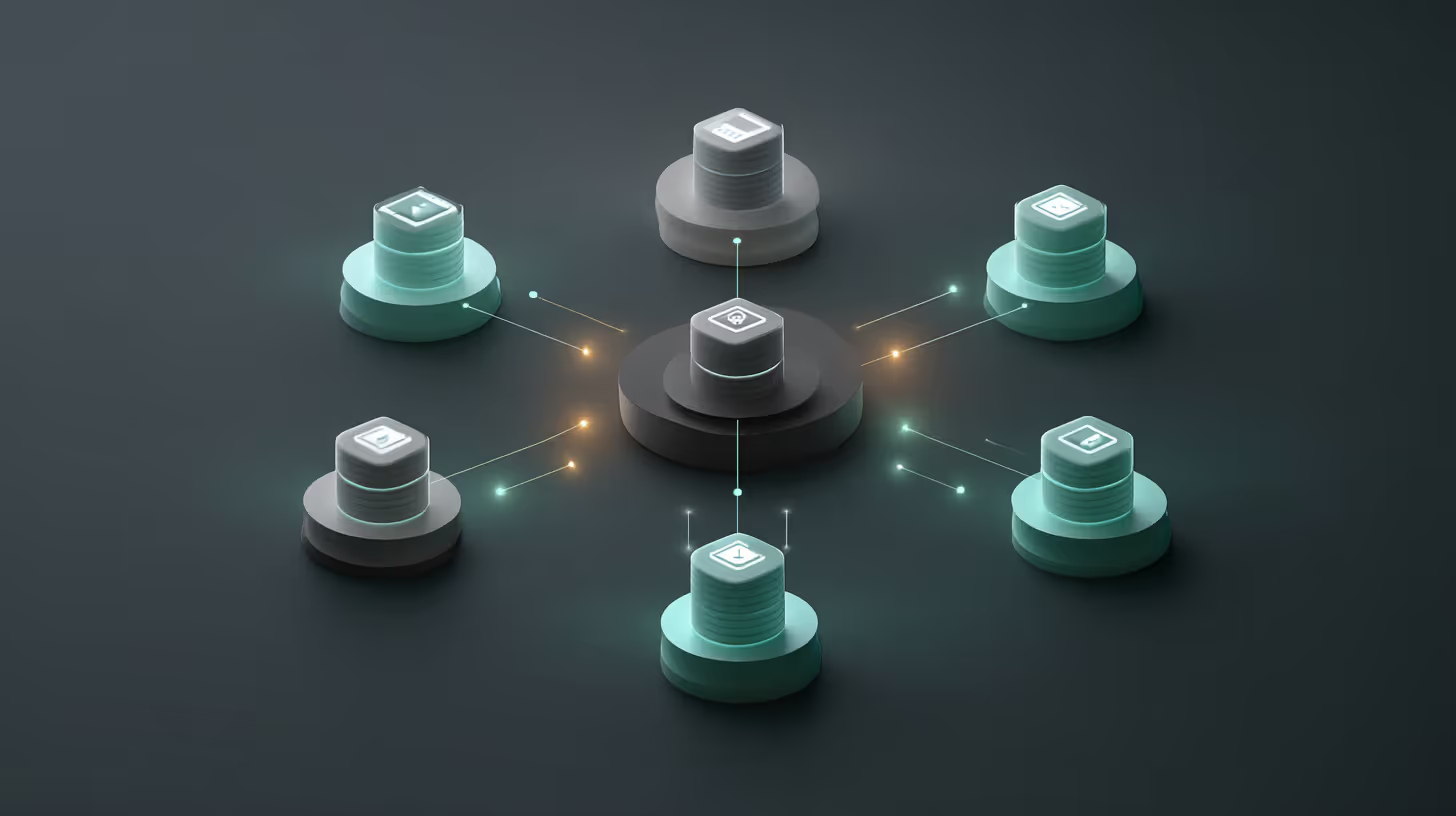
The technical architecture is worth understanding because it addresses several concerns that enterprise buyers rightfully have about AI and CRM data. Every SuperNinja task runs inside its own dedicated virtual machine, which means your Salesforce credentials and customer data are completely isolated from other users and sessions. The agent authenticates with Salesforce using OAuth 2.0, the same secure protocol that Salesforce uses for all third-party integrations, and you control exactly which objects and permissions the agent can access through standard Salesforce permission sets and profiles. This is not a shadow IT tool that bypasses your security model — it works within it.
What makes this approach fundamentally different from Salesforce's own Agentforce is accessibility and flexibility. Agentforce requires you to build agent topics, configure actions using Flows or Apex, ingest data into Data Cloud, and often engage Salesforce professional services or certified consultants. SuperNinja requires you to authenticate with OAuth and start talking. The barrier to entry is not weeks of configuration — it is minutes of setup.
Why Your Sales Team Needs an AI Agent in Salesforce
The case for connecting an AI agent to your CRM goes beyond simple automation. Traditional Salesforce automation tools like Process Builder, Flow, and even third-party platforms like Zapier can automate specific, predefined tasks: when a lead is created, send an email; when an opportunity reaches a certain stage, create a task. These are valuable but limited. They cannot understand context, make judgment calls, or handle the kind of nuanced, multi-step workflows that sales operations actually require.
Traditional automation tools operate on rigid if-then logic. AI agents operate on goal-based reasoning: given this pipeline, what should a knowledgeable sales manager focus on?
An AI agent like SuperNinja brings reasoning to your CRM. It can analyze a lead's behavior patterns and determine not just that they should be followed up with, but what the follow-up should say based on their engagement history, industry, company size, and the specific pages they visited on your website. It can review your pipeline and identify not just which deals are at risk, but why they are at risk and what specific actions might save them. It can generate forecasts that account for historical patterns, seasonal trends, and the individual performance characteristics of each rep on your team.
Perhaps most importantly, an AI agent eliminates the data quality problem that plagues every Salesforce implementation. CRM data is only as good as the humans who enter it, and humans are notoriously inconsistent about logging activities, updating stages, and maintaining accurate records. When an AI agent handles data entry and updates, the information is captured consistently, completely, and in real time. This transforms your CRM from a system that sales reps grudgingly update at the end of each week into a living, accurate reflection of your actual sales pipeline.
Top Use Cases: SuperNinja + Salesforce in Action
1. Intelligent Lead Scoring and Prioritization
Not all leads are created equal, but most sales teams treat them as if they are, working through their queue in chronological order rather than prioritizing based on likelihood to convert. SuperNinja can analyze your Salesforce lead data — including demographic information, engagement history, website behavior, email interactions, and firmographic data — to generate intelligent lead scores that go far beyond simple point-based models. The agent considers patterns in your historical conversion data to identify which lead characteristics actually predict closed deals in your specific business, then ranks your current leads accordingly. Ask SuperNinja to "review my open leads and tell me which five I should call today and why," and you will receive a prioritized list with specific reasoning for each recommendation, along with suggested talking points based on each lead's engagement history.
2. Automated Pipeline Management and Hygiene
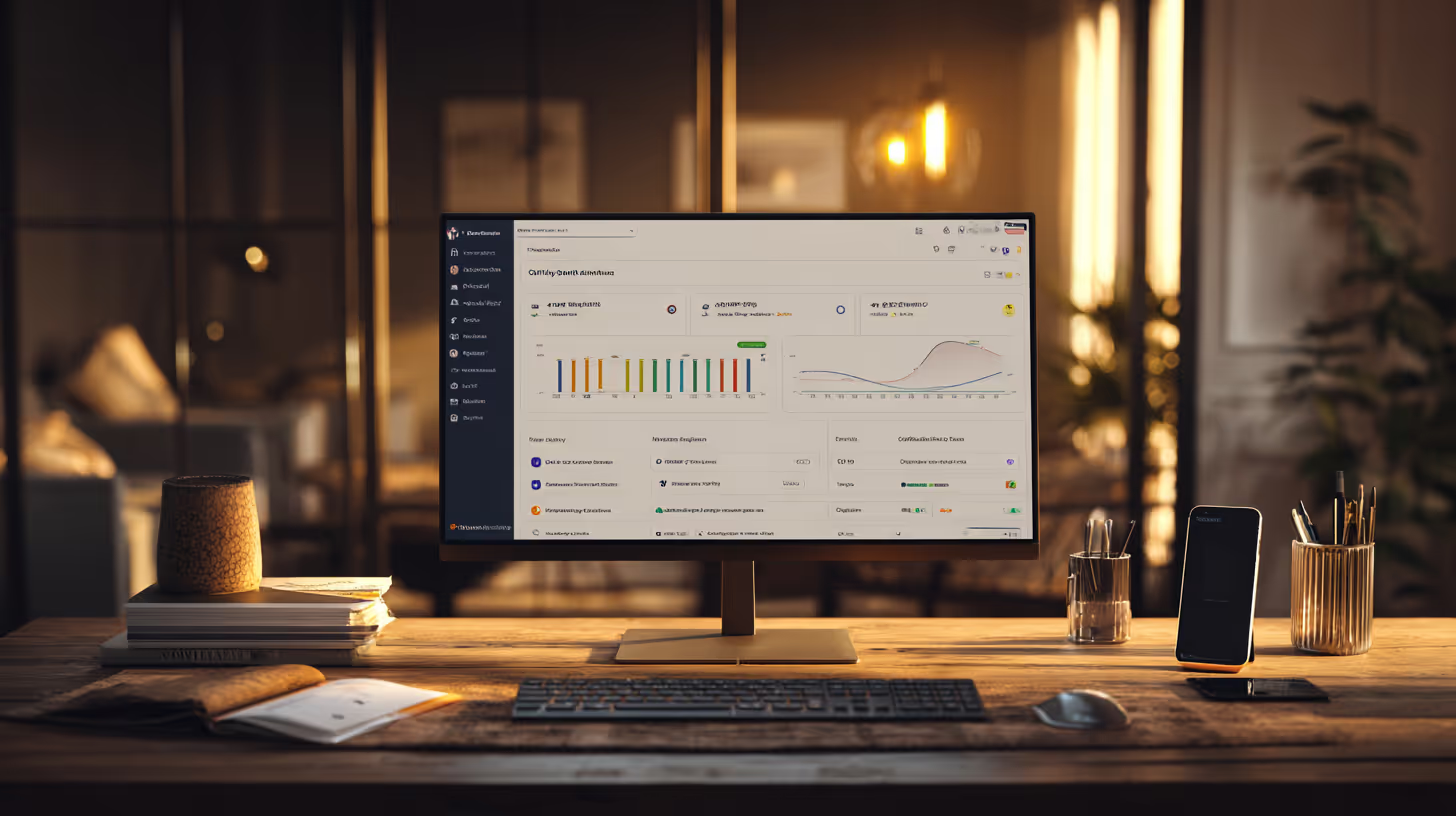
Pipeline hygiene is the bane of every sales manager's existence. Opportunities sit in the same stage for weeks without updates. Close dates slip repeatedly without explanation. Amounts change without documentation. The result is a pipeline that looks impressive on paper but bears little resemblance to reality, making accurate forecasting nearly impossible. SuperNinja can continuously monitor your pipeline and flag anomalies: opportunities that have been in the same stage for longer than your average sales cycle, deals with close dates in the past that have not been updated, opportunities missing key fields like next steps or competitor information, and deals where the amount has changed significantly without a corresponding note. The agent can also take action, sending gentle reminders to reps to update their opportunities, automatically adjusting close dates based on activity patterns, and generating weekly pipeline hygiene reports for sales managers.
3. Sales Report and Forecast Generation
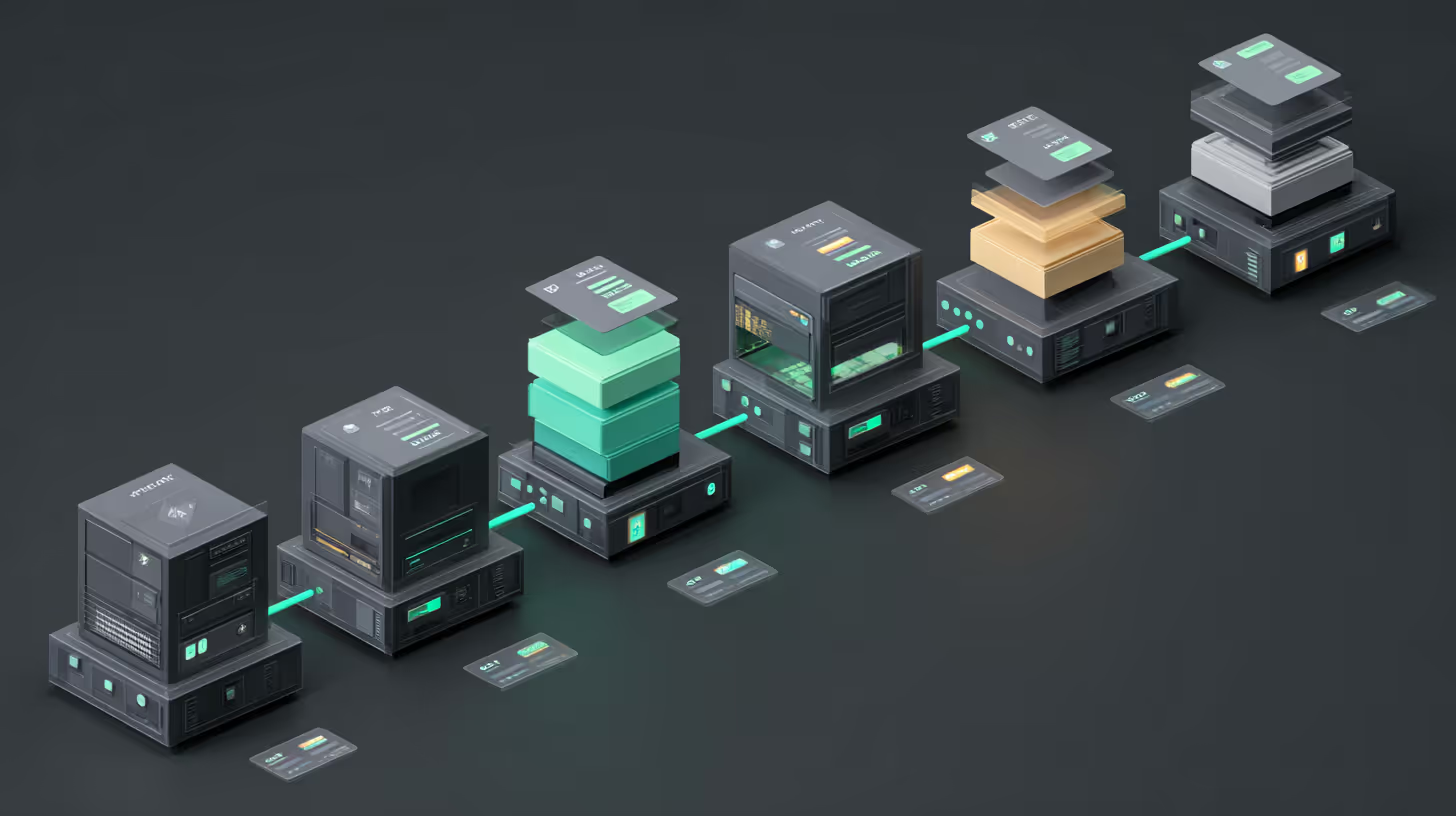
Building sales reports in Salesforce is a skill unto itself, requiring knowledge of report types, filters, groupings, and formulas that many users never fully master. SuperNinja eliminates this complexity entirely. Ask the agent to "generate a quarterly sales report broken down by region and product line, comparing this quarter to the same quarter last year," and it will query your Salesforce data, perform the analysis, and deliver a comprehensive report complete with key metrics, trends, and insights. For forecasting, the agent can analyze historical win rates, current pipeline composition, and individual rep performance to generate forecasts that are more accurate than the gut-feel estimates that most organizations rely on. The agent can even identify specific deals that are most likely to slip and recommend actions to keep them on track.

4. Contact and Account Research Enrichment
Sales intelligence is critical for effective selling, but manually researching every account and contact in your CRM is impractical at scale. SuperNinja can enrich your Salesforce records by researching accounts and contacts using its web research capabilities, then updating the relevant fields in Salesforce with the information it finds. Ask the agent to "research the top 20 accounts in my pipeline and update their records with recent news, funding rounds, and key executive changes," and it will conduct the research, synthesize the findings, and update your CRM records — a task that would take a human researcher hours or days, completed in minutes.
5. Email and Communication Drafting
Every sales interaction requires communication, and crafting personalized, relevant emails at scale is one of the most time-consuming aspects of the sales process. SuperNinja can draft emails directly from Salesforce context, pulling in account history, recent interactions, opportunity details, and contact preferences to generate messages that feel personal rather than templated. Ask the agent to "draft a follow-up email to the contacts at Acme Corp referencing our demo last week and proposing next steps based on their expressed concerns about integration timeline," and you will receive a polished, contextually appropriate email ready to send. The agent understands the nuances of sales communication — when to be formal versus casual, when to push for a meeting versus provide additional information, and how to address specific objections that have been documented in the opportunity record.
6. Competitive Intelligence Tracking
Understanding your competitive landscape is essential for effective selling, but tracking competitor activity across dozens or hundreds of deals is nearly impossible without dedicated resources. SuperNinja can analyze your Salesforce opportunity data to identify competitive patterns: which competitors appear most frequently, which ones you win against versus lose to, what objections are associated with specific competitors, and how your win rate changes when a particular competitor is involved. The agent can also monitor the web for competitor news, product launches, and pricing changes, and proactively alert your team when competitive intelligence is relevant to active deals.
7. Onboarding and Training Support
New sales reps face a steep learning curve when joining an organization, and much of that learning involves understanding how to use Salesforce effectively within the team's specific processes and conventions. SuperNinja can serve as an always-available Salesforce coach, answering questions about where to find specific data, how to update records correctly, what the team's sales process stages mean, and how to interpret dashboard metrics. This reduces the burden on sales managers and experienced reps who would otherwise spend significant time training new team members, while ensuring that new reps get consistent, accurate guidance from day one.
Getting Started: Connecting SuperNinja to Salesforce
Connecting SuperNinja to your Salesforce org is designed to be as frictionless as possible, reflecting NinjaTech AI's philosophy that powerful technology should be accessible to everyone, not just technical specialists. The process begins by logging into your SuperNinja account and navigating to the connectors section. Select Salesforce from the available integrations, and you will be redirected to Salesforce's standard OAuth authentication flow. Log in with your Salesforce credentials, grant the requested permissions, and the connection is established.
Once connected, SuperNinja has access to the Salesforce objects and fields that your permission set allows. There is no additional configuration required — no mapping fields, no defining triggers, no building workflows. You interact with your Salesforce data through natural language, and the agent translates your requests into the appropriate SOQL queries, API calls, and data operations. Start with something simple: "Show me my open opportunities closing this month" or "How many new leads did we get last week?" As you build confidence in the agent's capabilities, you can move to more complex requests like pipeline analysis, forecast generation, and automated data enrichment.
For organizations with strict data governance requirements, SuperNinja's architecture provides important safeguards. Every task runs in an isolated virtual machine, ensuring that your Salesforce data is never exposed to other users or sessions. The agent respects Salesforce's native security model, including field-level security, sharing rules, and record-level access controls. And because SuperNinja connects through standard OAuth rather than requiring admin-level API access, you can grant precisely the level of access that is appropriate for each user's role.
SuperNinja vs. Salesforce Agentforce: Choosing the Right AI Approach
Salesforce's own Agentforce platform is a capable AI solution, but it serves a different audience and use case than SuperNinja. Agentforce is designed for large enterprises with dedicated Salesforce administrators, developers, and often consulting partners. It requires significant investment in Data Cloud, configuration of agent topics and actions using Flows or Apex, and ongoing maintenance by technical staff. The result is a deeply integrated, highly customized AI experience — but one that takes weeks or months to implement and requires specialized expertise to maintain.
SuperNinja takes the opposite approach: maximum capability with minimum complexity. There is no Data Cloud to configure, no Flows to build, no Apex to write. You connect via OAuth and start working. This makes SuperNinja ideal for small and mid-market companies that lack dedicated Salesforce development resources, for teams that need AI-powered CRM capabilities today rather than after a multi-month implementation project, and for organizations that want to augment their Salesforce investment without adding another layer of Salesforce-specific complexity.
SuperNinja is not limited to Salesforce — the same agent that manages your CRM can also interact with your GitHub repositories, Slack channels, Jira boards, and email, creating truly cross-functional workflows.
The two approaches are not mutually exclusive. Large enterprises might use Agentforce for deeply embedded, high-volume automation within Salesforce while using SuperNinja for ad-hoc analysis, cross-platform workflows, and the kind of flexible, natural-language interaction that Agentforce's more structured approach does not easily support. The key differentiator is that SuperNinja is not limited to Salesforce — the same agent that manages your CRM can also interact with your GitHub repositories, Slack channels, Jira boards, and email, creating truly cross-functional workflows that no single-vendor solution can match.
Conclusion: Reclaim Your Selling Time
The promise of CRM has always been to make sales teams more effective, but the reality has often been the opposite — more data entry, more administrative overhead, more time spent feeding the system rather than feeding the pipeline. SuperNinja's Salesforce connector finally delivers on that original promise by placing an intelligent AI agent between your sales team and their CRM, handling the tedious work automatically while surfacing the insights that actually help close deals.

Whether you are a solo founder managing a handful of accounts or a sales leader overseeing a team of fifty reps, the impact is the same: less time on administration, more time on selling, and better data quality across the board. In a competitive landscape where every advantage matters, the teams that leverage AI to maximize their selling time will consistently outperform those that do not.
SuperNinja's Salesforce connector is available today for all plan levels starting at just nineteen dollars per month. Connect your Salesforce org, ask your first question, and discover how much more your team can accomplish when an AI agent handles the CRM busywork. Visit super.myninja.ai to get started for free.