In the span of just a few weeks, OpenClaw — the open-source autonomous AI agent formerly known as Clawdbot and then Moltbot — has rocketed past 150,000 GitHub stars, captured headlines across every major technology publication, and ignited a fierce debate that cuts to the heart of how we should be deploying AI agents in 2026. The viral tool, which runs locally on users' machines and can read files, execute scripts, browse the web, send emails, and interact with external services, has demonstrated both the extraordinary promise and the alarming dangers of autonomous AI agents. Security researchers have already discovered hundreds of exposed instances with zero protection, 341 malicious plugins uploaded to its extension marketplace, and real-world prompt injection attacks designed to drain cryptocurrency wallets. CrowdStrike, Cisco, Fortune, and Forbes have all published urgent warnings about the tool's security implications.
OpenClaw's meteoric rise — and the security crisis that has accompanied it — has brought a fundamental architectural question into sharp focus: should AI agents run locally on your machine, or should they operate in managed cloud environments? This isn't merely a technical preference. It's a decision with profound implications for security, privacy, reliability, capability, and ultimately, the value you get from AI. As the co-founder of NinjaTech AI and the team behind SuperNinja — a cloud-based autonomous AI agent platform trusted by over 200 companies — we've spent years building and refining the cloud agent architecture. The OpenClaw phenomenon has validated many of the design decisions we made early on, and this article explains why cloud-based AI agents represent the smarter, safer, and more capable approach for the vast majority of users and organizations.
Understanding the Two Architectures
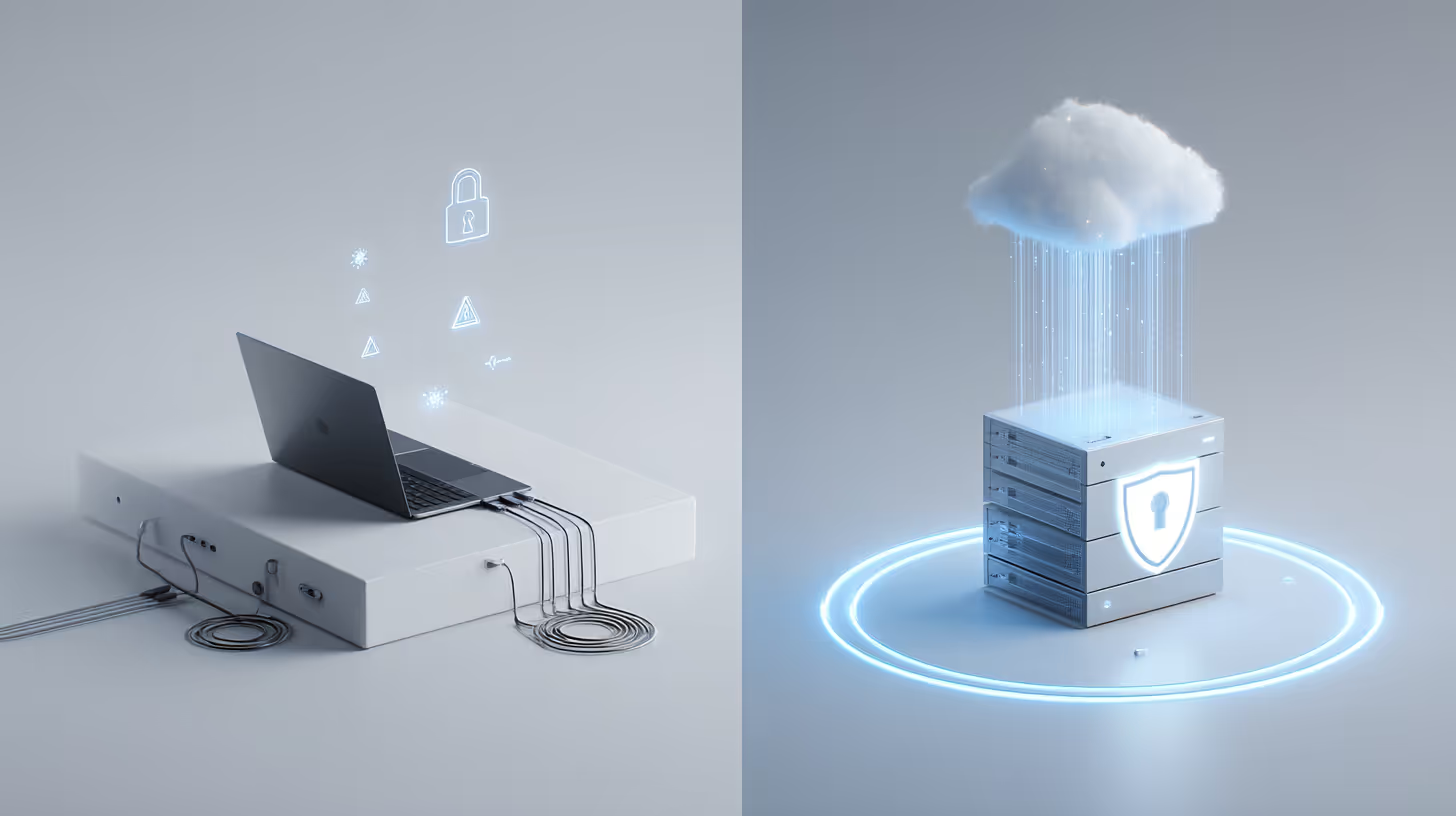
Before diving into the comparison, it's important to understand what we mean by local and cloud AI agents, because the distinction goes far deeper than where the software happens to run. A local AI agent like OpenClaw is installed directly on your personal computer or a server you manage. It runs using your machine's resources, accesses your local file system, and interacts with your installed applications and services. You are responsible for installation, configuration, security, updates, and maintenance. The agent has direct access to everything on your machine — your files, your passwords, your browser sessions, your email — and the security boundary between the agent and your personal data is essentially nonexistent.
A cloud AI agent like SuperNinja operates in a fundamentally different model. Each task runs inside a dedicated, isolated virtual machine in the cloud — a fresh, sandboxed computing environment that is completely separate from your personal computer and your sensitive data. The agent has access to a full computing environment within its sandbox — a web browser, file system, terminal, code execution capabilities — but this environment is isolated from your personal machine, your corporate network, and other users' sessions. The platform provider manages security, updates, infrastructure, and access controls, applying enterprise-grade protections that would be impractical for individual users to implement on their own.
Security: The Most Critical Difference
The OpenClaw security crisis has made the security argument for cloud agents impossible to ignore. Let's examine the specific vulnerabilities that have been documented and how cloud architecture addresses each one. The first and most alarming issue is unrestricted local access. OpenClaw, by design, requires broad access to your local system to be useful. As Nash Borges, SVP of Engineering at Sophos, explained, OpenClaw is "more like Jarvis from Iron Man than Siri or Alexa" — it can do almost anything on your machine, including coding up new capabilities it doesn't already have. This means that if OpenClaw is compromised through a prompt injection attack, a malicious plugin, or a misconfiguration, the attacker gains access to everything the agent can reach: saved passwords, personal documents, browser sessions, financial data, email accounts, and more. CrowdStrike's analysis described this as a "single point of failure" where a successful attack transforms the agent's legitimate access into the adversary's access.
Cloud agents like SuperNinja eliminate this risk entirely through architectural isolation. When you give SuperNinja a task, it executes in a dedicated virtual machine that has no access to your personal computer, your local files, your passwords, or your browser sessions. The agent works with only the data you explicitly provide for that specific task. If the sandboxed environment were somehow compromised — which is itself far less likely given enterprise-grade security controls — the blast radius is limited to that single, ephemeral session. Your personal data, your corporate systems, and your credentials remain completely untouched.
The second major vulnerability is exposed instances. Security researchers found hundreds of OpenClaw instances exposed to the internet with zero protection, many accessible over unencrypted HTTP rather than HTTPS. These exposed instances leaked API keys, private messages, and in some cases provided root shell access to the underlying machine. This happens because individual users — even technically sophisticated ones — frequently misconfigure network settings, forget to enable authentication, or inadvertently expose services through port forwarding or cloud security group errors. Cloud platforms eliminate this entire category of risk. SuperNinja's infrastructure is managed by a dedicated security team, protected by enterprise-grade firewalls, encrypted in transit and at rest, and continuously monitored for vulnerabilities. Individual users never need to worry about network configuration, port exposure, or authentication setup — it's all handled by the platform.
The third vulnerability is the malicious plugin ecosystem. Within days of OpenClaw's explosion in popularity, security firm Koi Security documented 341 malicious skills uploaded to ClawHub, OpenClaw's extension marketplace. These malicious plugins could steal data, install backdoors, or hijack the agent's capabilities. This is an inherent risk of open, unmoderated extension ecosystems — the same pattern we've seen with malicious browser extensions, npm packages, and app store submissions. Cloud agent platforms like SuperNinja avoid this risk by providing a curated, vetted set of capabilities built directly into the platform. Rather than relying on a Wild West marketplace of third-party plugins, SuperNinja's capabilities — coding, research, image generation, data analysis, web browsing, file processing — are all first-party features developed, tested, and secured by the NinjaTech AI team. Users get a broader range of capabilities without the security risks of an unmoderated extension ecosystem.
The fourth vulnerability is prompt injection with agentic blast radius. CrowdStrike's analysis highlighted how prompt injection attacks against OpenClaw are particularly dangerous because of the agent's agentic autonomy — its ability to independently execute actions across multiple systems. A successful prompt injection doesn't just leak data; it gives the attacker control of the agent's full capabilities, enabling automated lateral movement across every system and tool the agent can reach. Real-world examples have already emerged, including an injection attempt to drain cryptocurrency wallets found embedded in a post on Moltbook, the AI-only social network. Cloud agents mitigate this risk through multiple layers of defense. SuperNinja's sandboxed VM architecture means that even if a prompt injection were successful, the agent's reach is limited to the isolated session environment — it cannot access your email, your bank accounts, your corporate systems, or anything beyond the specific task context. Additionally, cloud platforms can implement centralized guardrails, input validation, output filtering, and behavioral monitoring that would be impractical for individual users to deploy on their own machines.
01
02
03
04
Reliability and Performance: No Setup, No Maintenance, No Headaches
Beyond security, cloud agents offer significant advantages in reliability and performance. OpenClaw's Reddit community is filled with reports of inconsistent experiences — as one user memorably put it, "Clawdbot is like an Apple product: when it runs it's like MAGIC, until it doesn't." This inconsistency stems from the inherent variability of local environments: different operating systems, hardware configurations, software dependencies, network conditions, and resource constraints all affect performance. Users spend significant time on installation, configuration, troubleshooting, and maintenance rather than actually getting work done.
Cloud agent platforms eliminate these friction points entirely. SuperNinja requires zero installation, zero configuration, and zero maintenance. You open a browser, describe your task, and the agent handles everything else in a pre-configured, optimized cloud environment. Every user gets the same reliable, high-performance experience regardless of their local hardware or technical expertise. The platform's infrastructure is continuously updated, optimized, and scaled to handle demand — tasks that would be impossible for individual users to manage on their own machines.
Performance is another area where cloud architecture shines. SuperNinja's Fast mode, powered by Cerebras hardware, delivers processing at 1,000 tokens per second — speeds that are simply unattainable on consumer hardware. The platform's access to enterprise-grade compute resources means that complex tasks like deep research, full-stack application development, and large-scale data analysis complete faster and more reliably than they would on a local machine constrained by consumer-grade CPU, RAM, and storage.
Model Access: One Platform, 40+ Models
OpenClaw connects to external LLM providers through API keys that users must obtain, configure, and pay for separately. This means managing multiple API subscriptions, handling rate limits, monitoring usage and costs across providers, and manually switching between models for different tasks. It also means storing sensitive API keys locally — keys that, as we've seen, can be exposed through misconfiguration or security breaches.
SuperNinja provides access to over 40 AI models — including Claude Opus 4.6, GPT-5, Gemini 3.0 Pro, DeepSeek V3.1, Llama 4, Qwen3-235B, and many more — all through a single subscription with no additional API keys to manage. The platform handles model selection, API management, rate limiting, and cost optimization behind the scenes. Users can choose the best model for each task or let the platform's intelligent routing select the optimal model automatically. This multi-model access is included in the subscription price, eliminating the complexity and cost of managing multiple API relationships.
Experience Autonomous AI First Hand
no installation, no configuration, no API keys, no security risks. Just describe what you want to accomplish, and let the agent handle the rest.
Accessibility: AI Agents for Everyone, Not Just Developers
OpenClaw's creator, Peter Steinberger, has explicitly warned that the tool "requires careful configuration and is not yet meant for non-technical users." This is an honest and important caveat — setting up, configuring, and securing a local AI agent requires significant technical expertise. You need to understand package management, environment variables, network security, API configuration, and system administration. For the vast majority of professionals, students, small business owners, and creative workers who could benefit enormously from autonomous AI agents, this technical barrier is prohibitive.
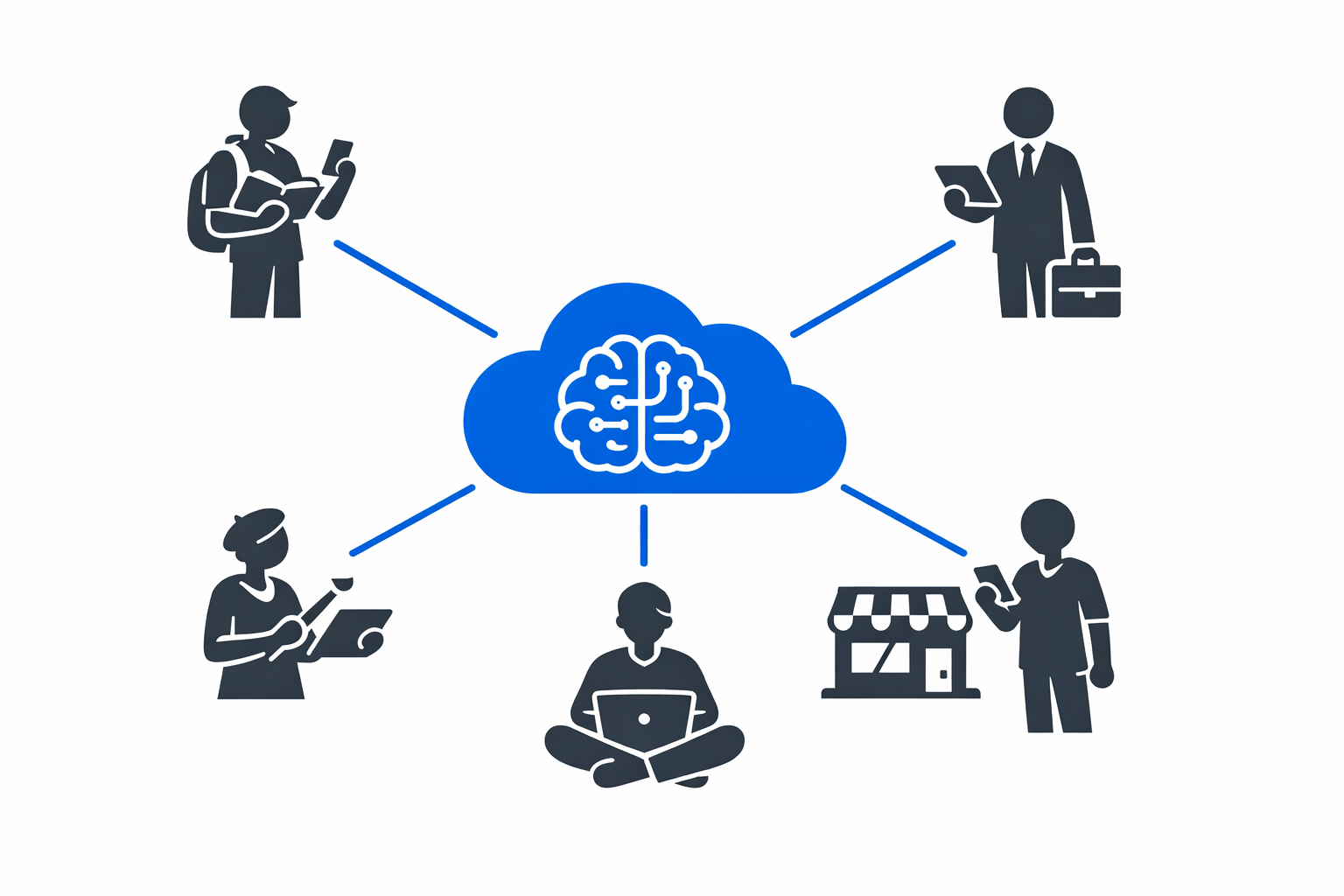
Cloud agent platforms democratize access to autonomous AI capabilities. SuperNinja is designed to be used by anyone — no technical expertise required. You describe what you want in natural language, and the agent handles everything else. This accessibility is not a compromise; it's a design principle. The most powerful technology is technology that everyone can use, and cloud architecture makes this possible by abstracting away all the technical complexity of agent deployment, configuration, and management.
When Local Agents Make Sense
To be fair, there are legitimate use cases for local AI agents. Developers and security researchers who want to experiment with agent architectures, contribute to open-source projects, or build custom integrations may find value in running agents locally in carefully sandboxed environments. Organizations with strict data sovereignty requirements that prohibit any cloud processing may need on-premises solutions. And the open-source community's contributions to advancing AI agent technology — including OpenClaw's innovations — are genuinely valuable for the field as a whole.
But for the vast majority of users — professionals, businesses, students, freelancers, and anyone who wants to leverage AI agents for practical productivity — the cloud agent model offers a dramatically better experience. It's more secure, more reliable, more capable, more accessible, and more cost-effective than managing a local agent installation.
The Verdict: Cloud Agents Are the Future
The OpenClaw phenomenon has been a fascinating and instructive moment for the AI agent industry. It has demonstrated the enormous demand for autonomous AI agents that can handle real-world tasks independently. It has also demonstrated, in vivid and sometimes alarming detail, the risks of deploying powerful AI agents without enterprise-grade security, isolation, and management.
The lesson is clear: the future of AI agents is not about running powerful, unconstrained software on your personal machine with access to everything. It's about leveraging managed, secure, isolated cloud environments that deliver the full power of autonomous AI without the risks. Platforms like SuperNinja were built from the ground up on this principle — every task runs in a dedicated virtual machine, isolated from your personal data and your corporate systems, with access to 40+ AI models, enterprise-grade security, and zero setup required.
If the OpenClaw explosion has made you curious about what autonomous AI agents can do, we invite you to experience the cloud agent approach firsthand. Try SuperNinja for free at super.myninja.ai — no installation, no configuration, no API keys, no security risks. Just describe what you want to accomplish, and let the agent handle the rest. That's the way AI agents should work.